

Safety Facts
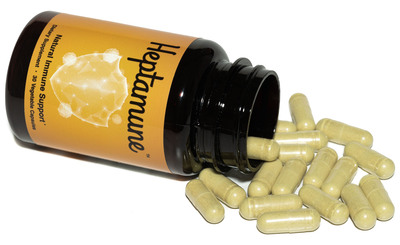
Note: The information on this page is not a substitute for professional medical advice. Please consult with your doctor before taking any new dietary supplement, including Heptamune.
Heptamune is a dietary supplement whose individual ingredients have a long-standing reputation of safety and effectiveness. Heptamune can be taken with most prescription and over-the-counter medications, with the exceptions described below.
When taken as directed, Heptamune is safe for daily use. When taken as directed, Heptamune is not addictive or habit-forming, and you can stop taking it at any time.
Most people that take Heptamune experience no side effects. If in the rare case side effects do occur, they tend to be mild and often disappear, especially when Heptamune is taken with food. Possible side effects of the individual ingredients in the Heptamune formula include:
- nausea
- stomach upset
- diarrhea
- headache
- a metallic taste
- skin rash or itching
Do not take Heptamune if you are pregnant or nursing.
Do not exceed the maximum dose of two capsules at once or four capsules daily. Before taking Heptamune, talk to your doctor if you have any pre-existing medical conditions or are taking any prescription medications.
Antibiotics
The zinc in Heptamune can bind to quinolone and tetracycline antibiotics, reducing how much of the antibiotic your body absorbs. If you are not sure which type you were prescribed, ask your pharmacist. If you are taking one of these antibiotics, take the antibiotic at least 2 hours before or 4 to 6 hours after Heptamune. Since the right timing can vary with the specific medication, we advise that you confirm it with your pharmacist or doctor.
Immunosuppressants and Autoimmune Conditions
Echinacea interacts with immune cells to support their activity, so it may work against medications that are meant to suppress the immune system, such as those taken after an organ transplant. If you take an immunosuppressant medication or have an autoimmune condition, we advise that you talk to your doctor before taking Heptamune or any new supplement.
Nitrate Medications
N-acetyl cysteine may increase the effects of nitrate medications prescribed for chest pain, which can cause headaches or lower your blood pressure. If you take a nitrate medication, we advise that you talk to your doctor before taking Heptamune or any new supplement.
Ragweed and Daisy Allergies
Echinacea belongs to the daisy family of plants. If you are allergic to ragweed, daisies, marigolds, chrysanthemums, or related plants, you may also react to echinacea, so we advise that you talk to your doctor before taking Heptamune.
Alcohol
Do not consume alcohol until you are familiar with the effects of Heptamune. In general, consumption of moderate amounts of alcohol is safe while taking Heptamune. However, we advise that you talk to your doctor before taking Heptamune or any new supplement.
Other Supplements
At the everyday and extra levels of support, it is generally safe to take Heptamune if you are also taking other vitamins or nutritional supplements. At the maximum level of support, however, four capsules provide 60 mg of zinc, 100 mcg of vitamin D3, and 400 mcg of selenium, which meet or exceed the daily upper limits for adults. While taking the maximum level, do not take any other supplement that contains zinc, vitamin D, or selenium, including a multivitamin, and use the maximum level only short-term, such as a week or two during heavy travel or a busy season. Of course, we always recommend talking with your doctor before taking any new supplements.